

Transatlantic Saramago: Trans-Iberianism and Decoloniality (by Burghard Baltrusch)
The concept of Trans-iberianism was coined by Saramago in order to highlight the need for the Iberian Peninsula, and Europe as a whole, to understand themselves as being interwoven, not only culturally, but also ethically, with the many and diverse cultural spaces that emerge from colonialism. It also bears mentioning that is one of the most important ideas behind the foundation of the Jangada network, coordinated by the International José Saramago Chair of the University of Vigo. Jangada is an international network of lusophone and Galician chairs, research centers and associations, whose main goal is "to create synergies and to promote collaboration among its members in relation to the projects and activities that are being developed and carried out within the scope of current Lusophone Studies, be it through teaching, research or extension activities, and always privileging interdisciplinary approaches".
Below you can find a text by Burghard Baltrusch (head of the International Jose Saramago Chair - University of Vigo) on trans-Iberianism and decoloniality as envisaged by Saramago and with a transatlantic perspective. The paper is also available as PDF in the annex.
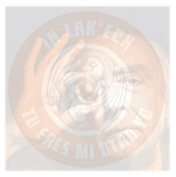
[Image by Burghard Baltrusch. The illustrarion overlays familiar photograph of Saramago with Luis Valdez’s line “Tú eres mi otro yo” (“You are my other self”), evoking the Mayan sense of shared being, interconnectedness and empathy.]
Transatlantic Saramago: Trans‑Iberianism and Decoloniality
Burghard Baltrusch (International José Saramago Chair)
Abstract
This essay maps key features of José Saramago’s transatlantic thought and its intersections with contemporary decolonial debate. I argue that Saramago’s notion of Trans‑Iberianism—articulated across his fiction, essays and Lanzarote notebooks—offers a materialist, anti‑hegemonic reimagining of Iberian identity that speaks directly to current efforts to decolonise knowledge and culture. Placing Saramago in dialogue with Donna Haraway’s concept of sympoiesis and Grada Kilomba’s theory‑in‑praxis, I show how his work prognosticates and complements contemporary concerns with interdisciplinarity, orality, hybridity and the ethical responsibilities entailed in cultural exchange.
Introduction
José Saramago (1922–2010) is widely known as a Nobel Prize‑winning novelist. Less acknowledged, perhaps, is the seriousness and consistency of his political thought. From early writings produced around the Carnation Revolution through his later fiction and the Lanzarote notebooks, he persistently interrogated colonial and patriarchal legacies and sought to reconceive Iberian identity in transatlantic terms. This essay traces several strands of that work, with The Stone Raft (1986) as a pivotal moment and the intellectual encounters of the 1990s as formative for what Saramago called Trans‑Iberianism — a practical, ethical and imaginative programme that resonates with today’s decolonial debates.
The Stone Raft: imagining transatlantic belonging
The Stone Raft stages a literal rupture: the Iberian Peninsula breaks away from Europe and drifts into the Atlantic, coming to rest between Africa and the Americas. Its images and aphorisms displace notions of rootedness and cultural purity. The novel offers a vivid imaginative basis for thinking of Iberia as fundamentally relational and transatlantic, a culture constituted by encounter rather than by static identity.
Dialogues in the 1990s
Saramago’s transatlantic orientation was sharpened by conversations with Latin American and Lusophone scholars. At a 1994 Comparative Literature conference in Alberta he encountered Benjamin Abdala Júnior, whose paper — later excerpted in Saramago’s Lanzarote Notebooks — read The Stone Raft alongside unequal literary relations between Europe and the Americas, and urged a decentring of the European gaze. This echoed Saramago’s own 1993 lecture in Edinburgh, where he called for ‘a trans‑Iberian vision of our place in the world […] without exceptions that exclude, and without hegemonies that oppress’. First voiced in 1986, the impulse did not harden into doctrine but reappeared across his work as a programmatic challenge to older Iberianisms — cultural, spiritual or providential — and as a move towards a materialist, plural and ethical conception of Iberian identity.
Trans‑Iberianism: politics, ethics and anti‑statism
Trans‑Iberianism rests on two interlinked claims: culture is dynamic and emerges through exchange; Europe bears responsibilities towards the cultures of its former colonies. These are analytic as well as moral propositions: Saramago insisted on solidarity over paternalism and on mutual transformation rather than unilateral appropriation. Politically, his stance was openly anti‑systemic. He targeted the State’s coercive power rather than the nation, arguing for social arrangements that transcend formal, state‑centred diplomacy. By the mid‑1990s he was unequivocal: the State’s structural violence is a root cause of injustice, and any renewed Iberianism must be informed by Latin American critical thought and decolonial practices. In Portugal this marked a break with Oliveira Martins’s cultural Iberianism, Miguel Torga’s spiritual Iberianism and Eduardo Lourenço’s Europe‑centred teleology.
Caliban, para‑doxa and the mirror of Latin America
Abdala Júnior’s invocation of anthropophagy — the Brazilian modernist metaphor of devouring and creatively transforming the cultures of Prospero, Africa and the Indigenous Americas — aligns closely with José Saramago’s intellectual project. Rather than passive reception, it proposes an active, critical digestion of inherited forms. In a similar vein, Leyla Perrone‑Moisés’s idea of the ‘Latin American para‑doxa’ — Latin America as a colonial mirror capable of exposing Europe’s blind spots — supplies the dialectical instrument Saramago required. Trans-Iberianism thus becomes a way of engaging with that mirror: of learning from it and, through that encounter, reconfiguring Europe from the outside in.
Distance, Lanzarote and the raft as life practice
Distance sharpened Saramago’s vision. When he moved to Lanzarote in 1993 — after the Portuguese government blocked The Gospel According to Jesus Christ from nomination for the European Literature Prize — the relocation marked more than a personal decision. It was an ethical and political gesture. ‘Lanzarote is my stone raft,’ he observed, echoing his own fictional imagery. The island became at once refuge and laboratory: a lived expression of his drifting civilisational project — a secular humanism inclined towards egalitarianism, ecological responsibility and anti-speciesism — and a vantage point from which his work addressed an increasingly global audience.
Autopoiesis, sympoiesis and self‑transformation
A recurrent theme in Saramago’s later writing is the ethical importance of inner change. He argued that social transformation begins with the individual’s capacity for self‑reformation — an existentialist‑tinged autopoiesis. This is visible in The Stone Raft, where characters, displaced and vulnerable, must reinvent themselves. The idea surfaces earlier too, in his 1978 tribute to Jorge de Sena: both writers rejected a patriarchal Portugal and embraced exile in pursuit of an ethical critique.
Reading Saramago alongside Donna Haraway deepens this insight. Haraway’s sympoiesis — ‘making‑with’ — insists that no system is wholly self‑producing; worlds are co‑created. Saramago does not dismiss autopoiesis but embeds self‑formation in relational, co‑creative processes. The tension between self‑making and world‑making is, for him, generative: transformation must be both personal and shared.
Chiapas: listening, and the ethics of withdrawal
When Saramago travelled to Chiapas in 1996, just months before learning that he had won the Nobel Prize, he did so in deliberate search of a confrontation. He argued that Europe, and “those of us from the Peninsula”, must renew transatlantic dialogue in a way that is entirely free of neocolonial intent. His prologue to the Writings of Subcomandante Marcos, “Chiapas, Name of Pain and Hope”, is a powerful example of this approach. Rafael Guillén’s failure to communicate with Indigenous communities and his subsequent ‘vanishing into the mist’ serve as a metaphor for ethical listening: sometimes one must withdraw to hear, must engage ‘without exceptions that exclude, and without hegemonies that oppress’. This refusal to dominate conversation—this insistence on encountering the Other is central to his idea of transatlantic dialogue.
Limits of kinship and ethical caution
Haraway’s caution that kin‑making must respect historically specific forms of kinship is instructive: solidarity cannot be drawn up abstractly without attending to difference and context. Saramago’s insistence on self‑transformation combined with his rejection of neocolonialism also establishes ethical limits: making kin must respect historically situated and diverse forms of kinship that cannot be generalised or appropriated in the name of a hastily imagined common humanity. Autopoiesis and sympoiesis are mutually reinforcing rather than opposed; Trans‑Iberianism is best understood as a living, evolving practice grounded in mutual respect.
Brazil, Mexico and the utopian dream
Encounters with Brazilian and Mexican thought in the 1990s fed Saramago’s ‘utopian dream’ of a ‘creative Trans‑Iberianism’: a cultural and political endeavour to apprehend the Americas while imagining a reconfigured Europe. These currents anticipated decolonial debates that have only recently gained broader traction in Portugal and Spain. Resistance to decolonising the Portuguese canon persists; much of the research that might widen the debate still arrives from abroad.
Performance, Kilomba and the politics of knowledge
Grada Kilomba — afro-descendent Portuguese, based in Germany — offers a contemporary counterpoint. Her practice merges research, performance and installation to ‘produce knowledge by producing questions’. The Boat (2021) — 140 charred blocks forming a slave‑ship hull, punctuated by live performance — confronted Portugal’s reluctance to face its colonial past and insisted on recognition as an ethical demand. Kilomba’s ‘performing knowledge’ foregrounds embodiment and affect; read alongside Saramago, it emphasises self‑work, interdisciplinarity, hybrid art and the refusal to treat knowledge as neutral.
Five pathways for decolonising knowledge
Barreiros and Moreira (2020), drawing on Kilomba, propose five pathways that may also shed light on Saramago’s aims: working on ourselves; interdisciplinarity as method; hybrid art as decolonial expression; a return to source(s); and the performance of knowledge as theory-in-praxis. These guideposts also help to situate Trans-Iberianism within the broader critique of Western hegemonies articulated by authors such as Foucault, Fanon, Amílcar Cabral, Spivak, Quijano, and more recent decolonial theorists such as Walter Mignolo.
Autopoiesis, recognition and interdisciplinarity
Kilomba’s remark, ‘I don’t tell stories for others — I tell stories to understand who I am’, links self‑repair to political recognition. Though her method differs from Saramago’s, both view individual transformation as a precondition for collective recognition. Interdisciplinarity is not mere eclecticism but a methodological demand: it creates space for plural voices that contest the coloniality of knowledge and the illusion of dispassionate objectivity. Saramago’s fiction, which resists singular authority in favour of collective narration, stages precisely such an intervention and may be compared to Kilomba’s hybrid art — which combines scholarship and performance — as a decolonial practice that unsettles boundaries between disciplines, genres, and forms of authority.
Blindness, sympoiesis and orality
In Blindness (1995), José Saramago gives striking form to his distinctive collective voice. The doctor’s wife, the only character who retains her sight, becomes a lucid witness whose decisive agency anchors the novel. Yet her clarity does not translate into narrative dominance. Rather, it mirrors the way Saramago’s prose resists the authority of a single, commanding voice, dispersing perception and judgement across a fragile community. This hybrid narrative mode, shaped by cadences of orality, grew out of Saramago’s immersion in the oral culture of the Alentejo while writing Raised from the Ground (1980). There he forged a style that joins inward autopoiesis — the self-making force of narrative — with outward sympoiesis, a shared process of becoming. The result is what he called a ‘continuous conversation’: a prose that restores performative presence to the written word and unsettles canonical expectations of form. He described this shift as ‘a small subversion […] but one of an ontological nature’. From this return to cultural roots — and from his own experience of marginalisation as a working-class, self-taught writer — emerges a decolonial project intent on making knowledge live through voice, memory and mutual recognition.
Conclusion: Trans‑Iberianism as practice and institutional challenge
Although decolonial scholarship is increasingly visible globally, Portugal has been slower to embed such debates within its institutions. Saramago’s Trans‑Iberianism anticipates the urgent questions: whose histories are taught, which voices count, and how might genuinely dialogic, non‑hierarchical exchange be fostered? Trans‑Iberianism is not a settled doctrine but a philosophy‑in‑practice — a constellation of evolving commitments that bind literary imagination to ethical responsibility and political critique. Its strength lies in weaving together self-making and world-making, in insisting on attentive listening and mutual transformation, and in embracing hybrid, interdisciplinary practices that produce knowledge performatively.
If it is to remain vital, Trans-Iberianism must move beyond critique alone and help to ‘make knowledge come alive’. That requires inward labour as much as outward reform: a re-examination of ourselves, institutional renewal within the academy, and forms of cultural exchange that refuse neocolonial postures. Across his fiction, essays and public interventions, Saramago leaves a distinctly human trace — an invitation to recognise the Other within ourselves and to participate, responsibly and imaginatively, in a shared transatlantic and decolonial endeavour.
References and further reading
Baltrusch, B. (ed.) (2010) ‘A Nova Mensagem do Trans‑Iberismo — sobre alguns elementos utópicos e metanarrativos no discurso saramaguiano’, in B. Baltrusch (ed.), O que transforma o mundo é a necessidade e não a utopia — Estudos sobre utopia e ficção em José Saramago. Berlin: Frank & Timme, pp. 53–72.
Baltrusch, B. (2020) ‘A sua jangada ainda flutua sobre as águas: Revisitando José Saramago dez anos após a sua morte — com Sena e Sartre ao fundo’, Santa Barbara Portuguese Studies, 5, pp. 1–25.
Baltrusch, B. (2022) ‘Sobre o poético e o político em José Saramago’, Cincinnati Romance Review, 52, pp. 35–52.
Baltrusch, B. (2023) '”Olhemos em silêncio, aprendamos a ouvir” — o transiberismo saramaguiano e o debate decolonial’, Abriu: estudos de textualidade do Brasil, Galicia e Portugal [online].
Barreiros, I. B. and Moreira, J. K. (2020) ‘“To decolonize is to perform”: The Theory‑in‑Praxis of Grada Kilomba’, in M. Rendeiro and F. Lupati (eds.), Challenging Memories and Rebuilding Identities: Literary and Artistic Voices that undo the Lusophone Atlantic. New York and London: Routledge, pp. 56–81.
Gómez Aguilera, F. (ed.) (2010) As Palavras de Saramago. Translated by R. Freire d’Aguiar, B. Ajzenberg, E. Brandão and F. Carotti. São Paulo: Companhia das Letras.
Haraway, D. J. (2016) Staying with the Trouble: Making Kin in the Chthulucene. Durham, NC: Duke University Press.
Junior, B. A. (1996) ‘Necessidade e solidariedade nos estudos de literatura comparada’, Revista Brasileira de Literatura Comparada, 3, pp. 87–95.
Kilomba, G. (2017a) ‘Living in a Space of Timelessness: Theresa Sigmund in Conversation with Grada Kilomba’, Secrets do Tell, exhibition catalogue. Lisbon: MAAT, pp. 94–99.
Kilomba, G. (2017b) ‘Continuamos, gloriosamente, a contar quantos países falam português’, interview with Lúcia Crespo, Jornal de Negócios, 10 November 2017 [online].
Kilomba, G. (2017c) ‘“Não conto histórias para os outros, conto histórias para perceber quem sou Eu”: entrevista a Sílvia Escórcio’, Contemporânea, 12 [online].
Kilomba, G. (2017d) The Most Beautiful Language, exhibition catalogue. Lisbon: EG‑EAC.
Kilomba, G. (2020) Memórias da Plantação — episódios de racismo quotidiano. Lisbon: Orfeu Negro. (Original English edition: Plantation Memories.)
Miranda, A. D. (coord.) (2023) Saramagia - testimonios y recuerdos sobre José Saramago en su paso por México. Ciudad de México: Grano de Sal.
Perrone‑Moisés, L. (1997) ‘Paradoxos do nacionalismo literário na América Latina’, Estudos Avançados, 11(30), pp. 245–259.
Sáez Delgado, A. (2020) ‘José Saramago, transiberista’, in C. Reis (ed.), José Saramago: Nascido para isto. Lisbon: Fundação José Saramago, pp. 47–61.
Saramago, J.; Alves, C. F. [et al.] (1986) ‘A facilidade de ser ibérico’, interview, Expresso, 8 November 1986, pp. 36–39.
Saramago, J. A Jangada de Pedra. Lisbon: Caminho. [The Stone Raft — original Portuguese edition; English translations available.]
Saramago, J. (1988) ‘A Country Adrift’, Times Literary Supplement, no. 4471, p. 1370.
Saramago, J. (1990) ‘Mi iberismo’, in C. A. Molina (ed.), Sobre el iberismo y otros escritos de literatura portuguesa. Madrid: Akal.
Saramago, J. (1993a) ‘Ibéria entre Europa e América Latina’ [online].
Saramago, J. (1994) Cadernos de Lanzarote, Diário I. Lisbon: Caminho.
Saramago, J. (1995a) Cadernos de Lanzarote, Diário II. Lisbon: Caminho.
Saramago, J. (1995b) Ensaio sobre a Cegueira. Lisbon: Caminho. [Blindness.]
Saramago, J. (1996) Cadernos de Lanzarote, Diário III. Lisbon: Caminho.
Saramago, J. (1998a) Cadernos de Lanzarote, Diário IV. Lisbon: Caminho.
Saramago, J. (1998b [2010]) ‘De como a personagem foi mestre e o autor seu aprendiz’, Público, 18 June 2010 [online].
Saramago, J. (1999a) Discursos de Estocolmo. Lisbon: Caminho.
Saramago, J. (1999b) Folhas Políticas 1976–1998. Lisbon: Caminho.
Saramago, J. (1999c) Cadernos de Lanzarote, Diário V. Lisbon: Caminho.
Saramago, J. (2001) “Chiapas nombre de dolor y esperanza”. Trad. de Pilar del Río. In Subcomandante Insurgente Marcos: Nuestra arma es nuestra palabra: escritos selectos, Juana Ponce de León (org.), New York: Seven Stories, xix-xxii.


